Pop-Corny Brain दिमाग
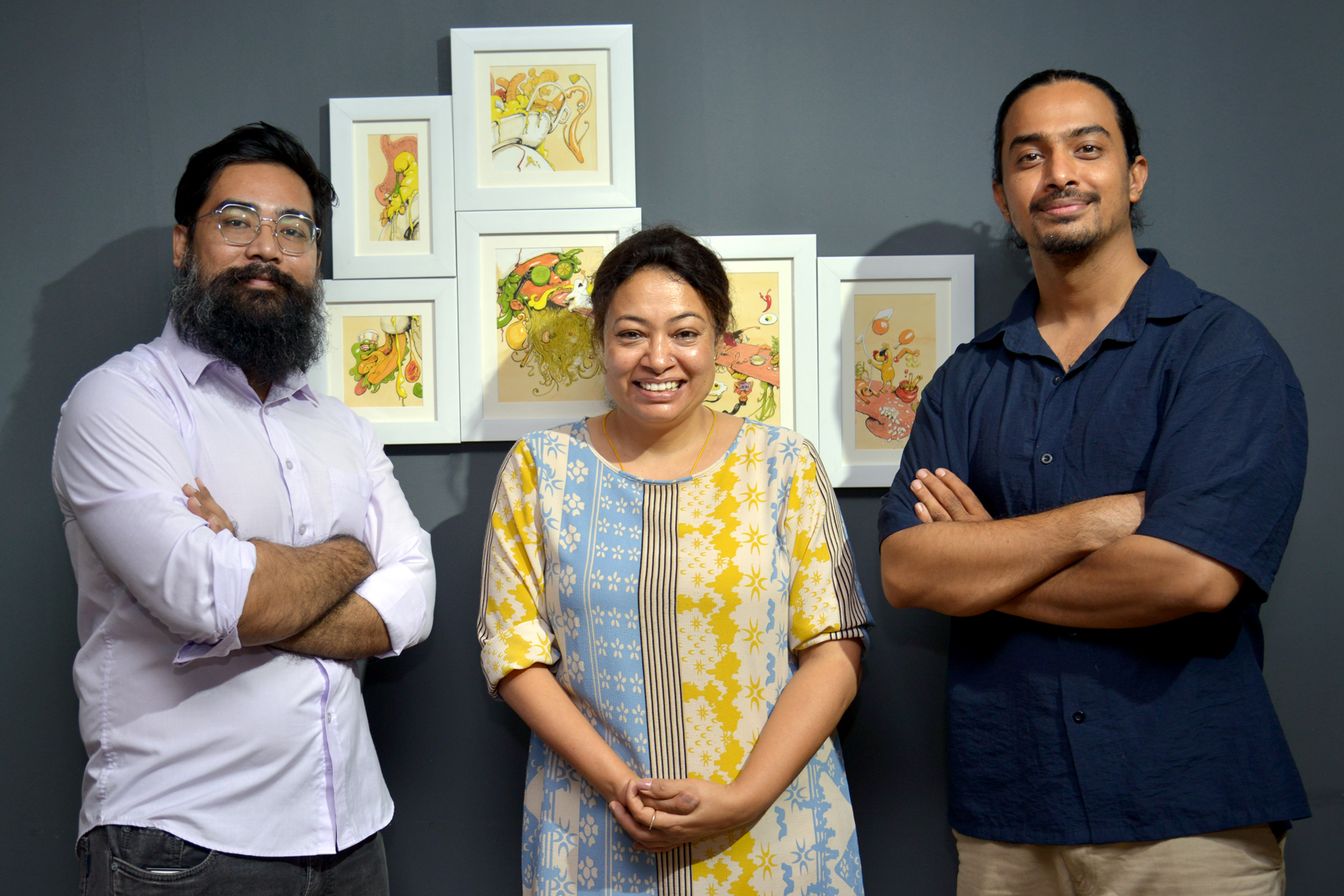
Exhibiting Artists
Can we still experience a peaceful mind being in this flux? Can we sit quietly for a moment without feeling the need to fill the silence? Where does our attention actually belong?
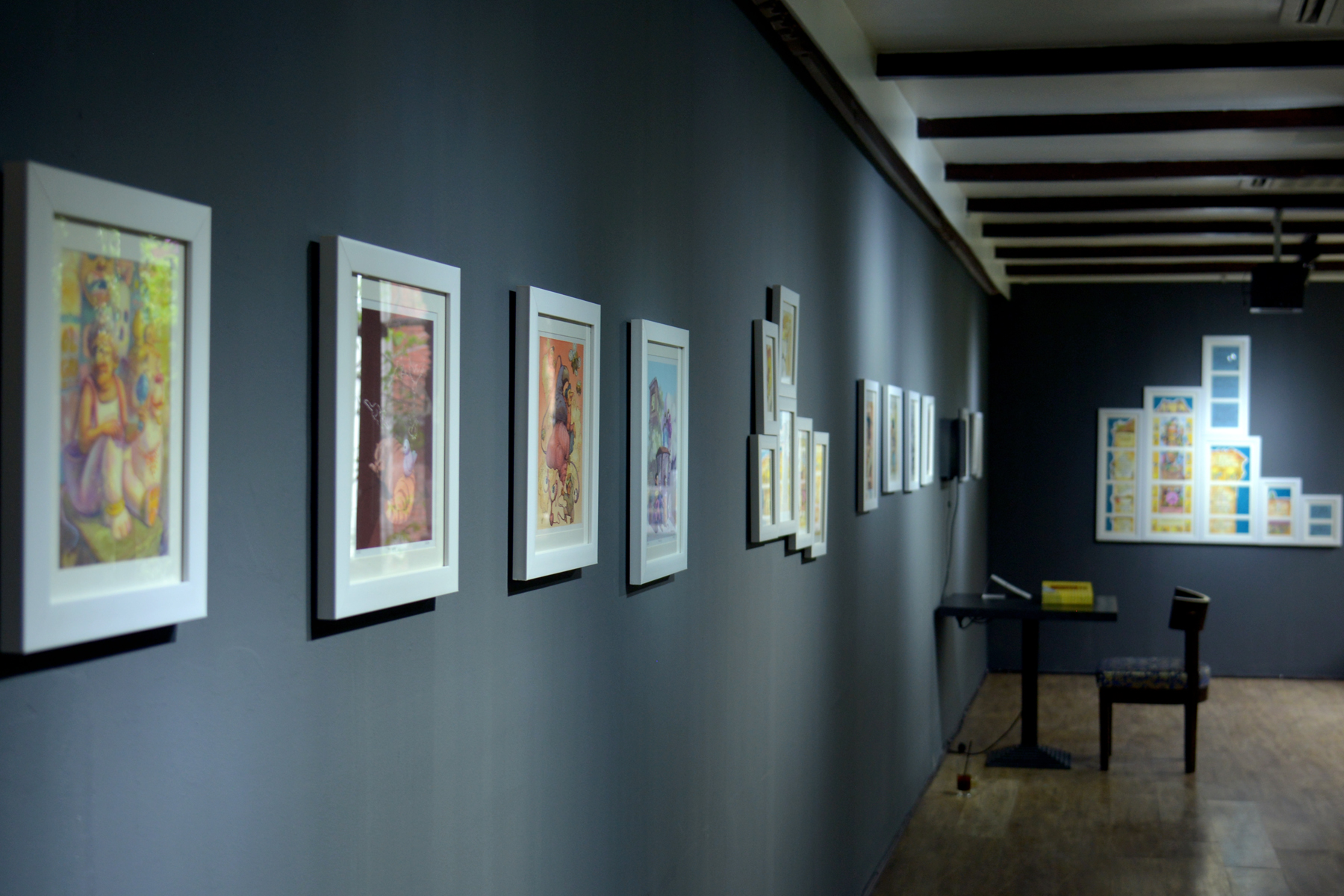
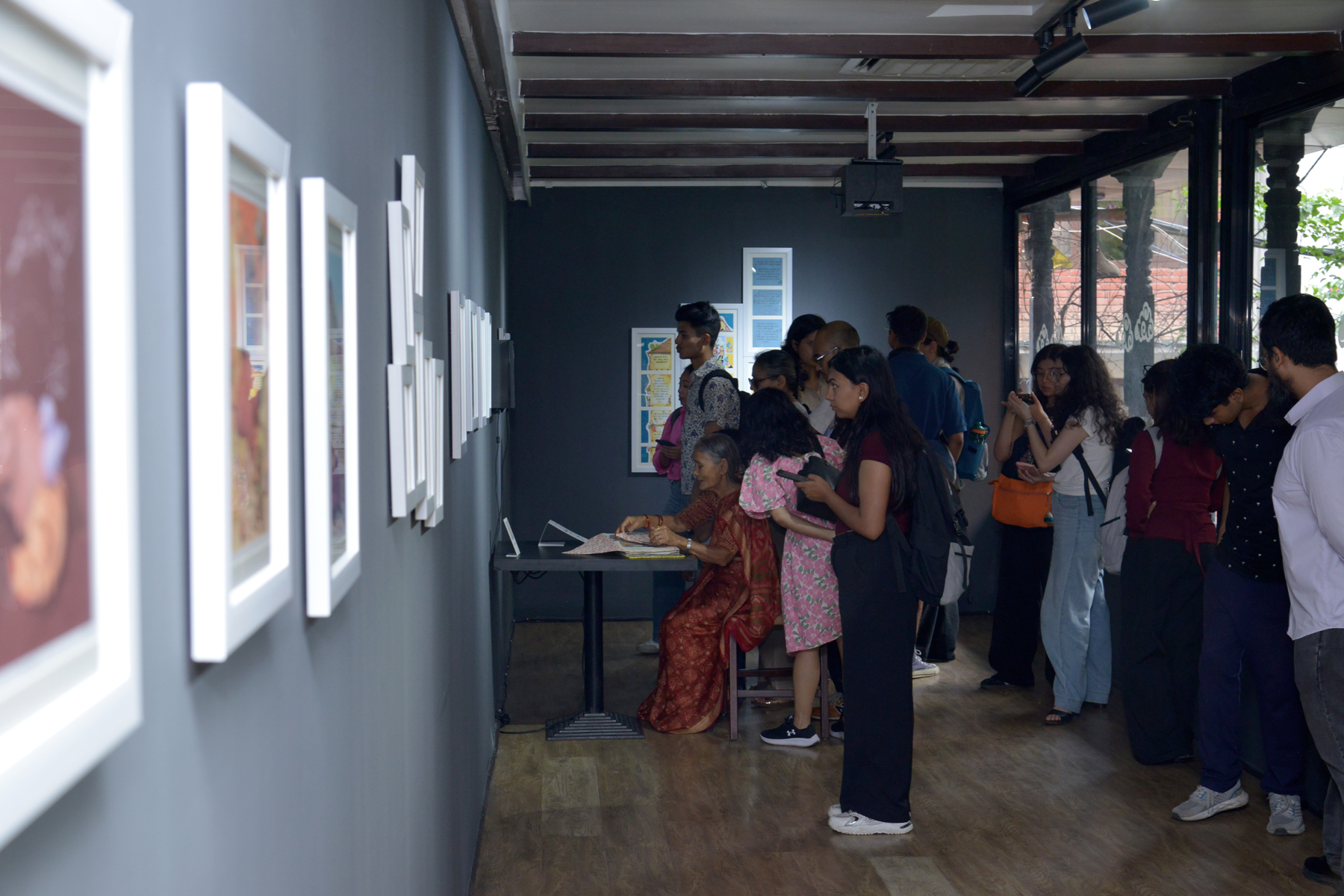
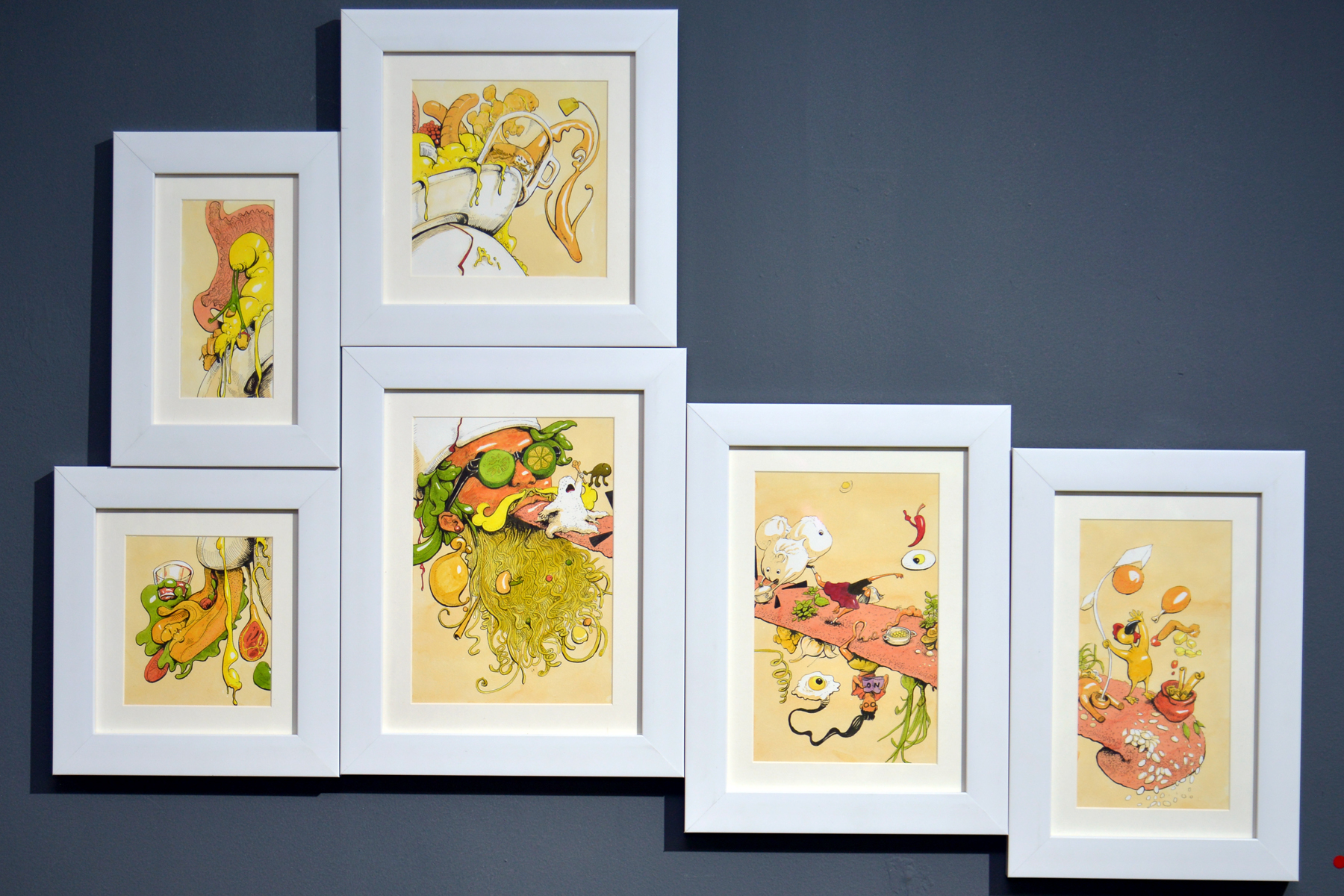
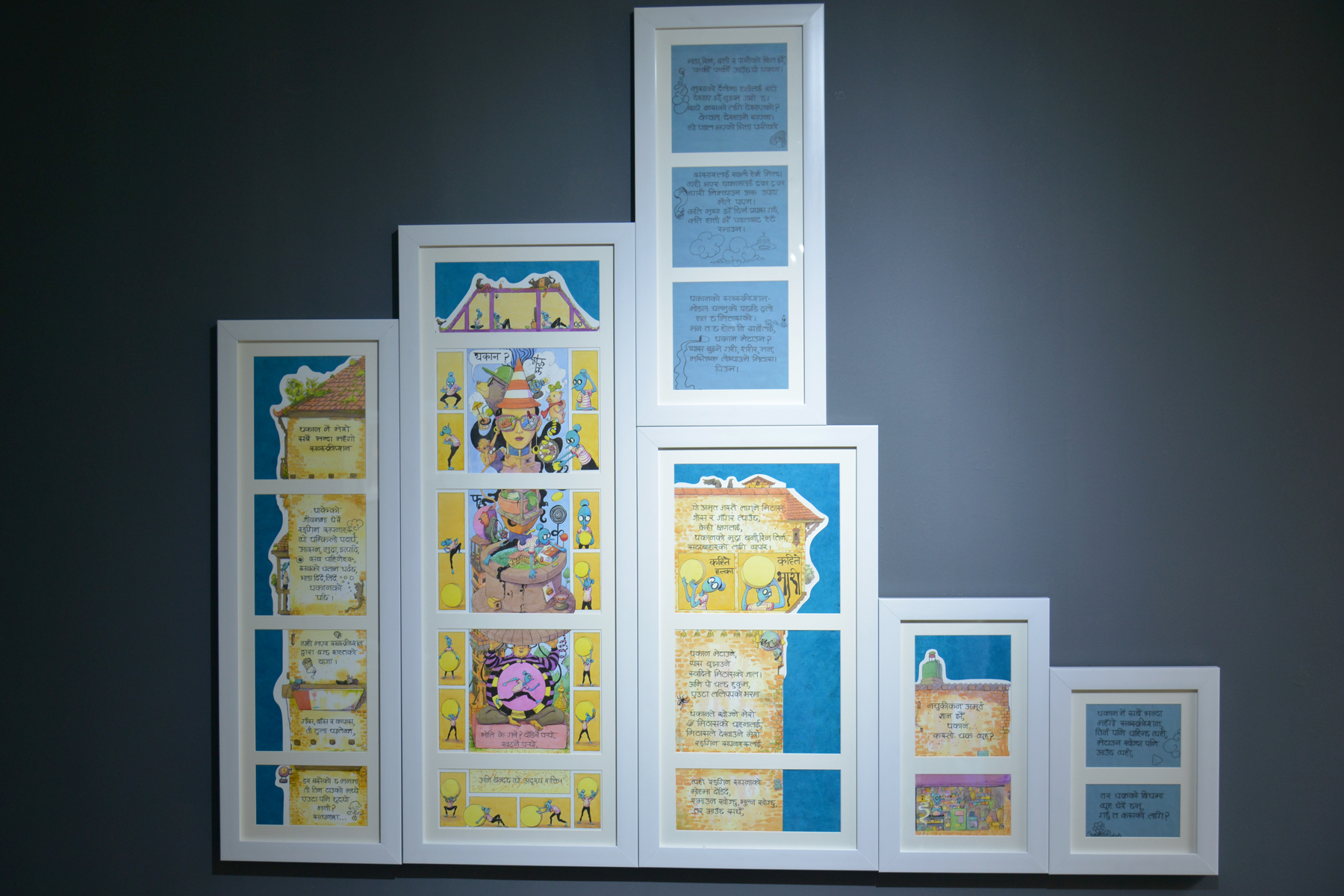
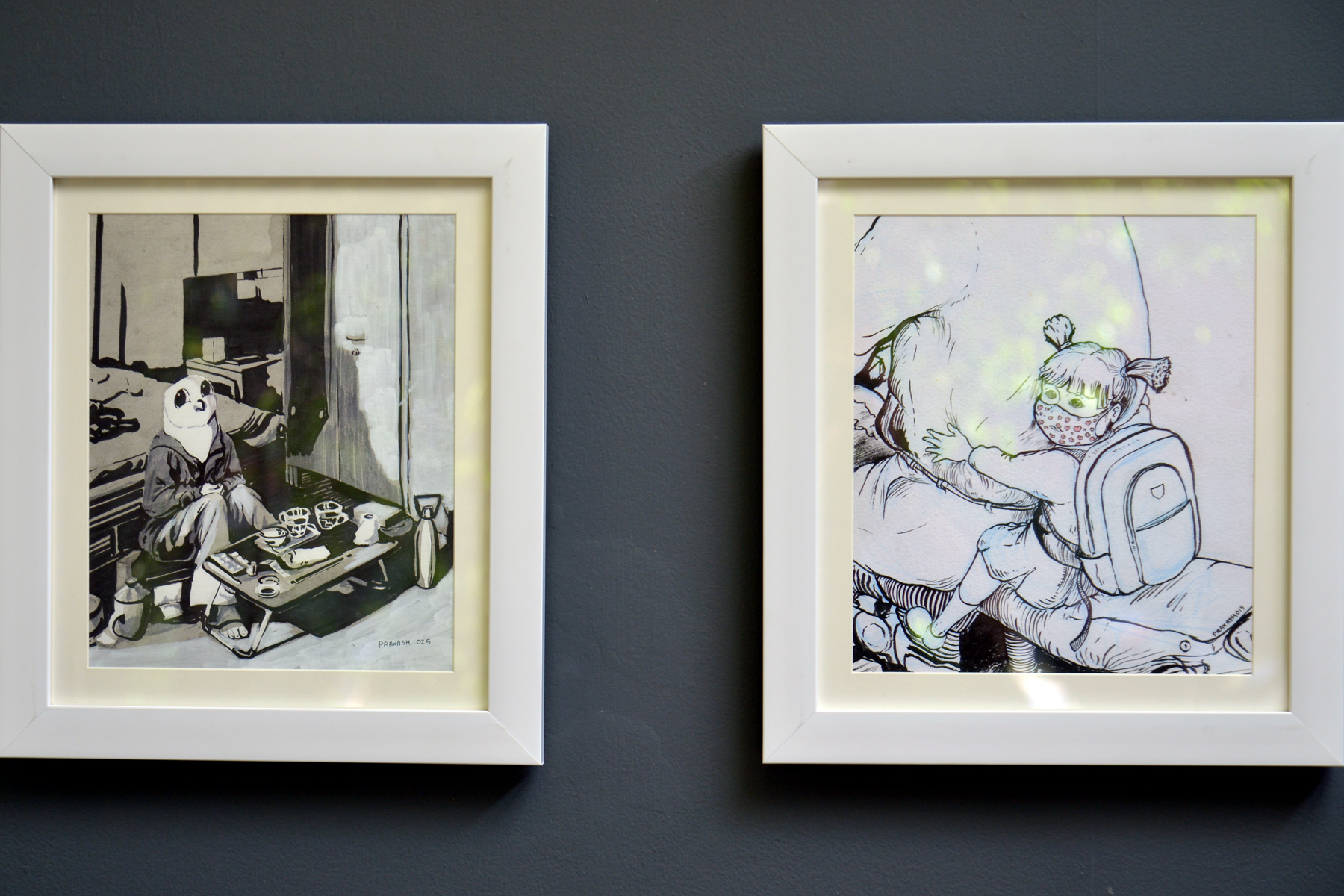
These quiet, urgent questions lie at the core of Pop Corny Brain. In this exhibition, characters emerge, distort, react, perform, dissolve into their environments, and re-emerge in unexpected configurations. While these drawings draw freely from the vibrant visual language of illustration, beneath their wit and absurdity lies a far more restless territory: the interior landscape of the contemporary human psyche.
As a curator, I recognized something of my own restlessness in Prakash’s work long before I understood why. What drew me in was his distinct visual style and his commitment to making art directly from lived experience, not mental well-being as an abstract theme, but as something felt, daily, in the body. His surreal worlds arise from a condition I know well: the difficulty of staying mentally present within a life compressed by information overload, consumerism, and constant connectivity. The virtual continuously bleeds into our private sanctuaries, reshaping our emotional baseline, until anxiety, fatigue, and isolation start to feel like default settings of modern life.
Pop Corny Brain steps directly into this terrain through humor, absurdity, and visual poetry, fragments of a mind asked to process too much, react too fast, and remain constantly available. The result reads like a visual stream of consciousness: chaotic, strange, deeply humored, yet intensely familiar.
Prakash’s reflections on mental well-being are inseparable from the mechanisms of contemporary capitalism, the architecture we operate within out of necessity, consuming, producing, performing, sustaining momentum. Critically, he does not stand outside this machinery as an observer. He works from within it, using wit and exaggeration to name the system we’re all still inside.
Ultimately, Pop Corny Brain asks us to examine not just the noise around us, but our own participation in it. The goal isn’t to silence that noise completely, it’s to carve out one conscious moment within it, where we can hear ourselves.
Artwork Collections
Our Gallery